
Below is a selection of articles I have written on a range of topics from fashion and couture to everyday conservation and scientific breakthrough.
- From Past to Present: Schiaparelli Spring/Summer 2025
- Activism and Anarchism: How Leigh Bowery wrote the blueprint of being you.
- Protecting Diversity: Gamete and Embryologists at James Cook University develop Sperm Freezing technique alongside Hybrid model Vital in the Conservation of the African Wild Dog
- Big Pollinators Tiny Packages
From Past to Present: Schiaparelli Spring/Summer 2025
Pulling from past fashion trends bringing them back into the limelight, with a modern twist
Feb 26, 2025
During the spring/summer 2025 Paris fashion week we saw the likes of many designers and brands showcasing their ready-to-wear line, Schiaparelli included. Headed by Creative Director Daniel Roseberry he celebrated the women that have inspired each and every look, helping bring his creative vision to the fashion world, “This collection, like all my work, owes everything to the women who brought it to life.”
Schiaparelli showcasing its future vintage line all while adapting the norm of fashion, had an 80’s throwback through their exaggerated shoulder pads, naked dress and many trending staples of the 1980’s. We look into what makes up the outfits from the walk and how Roseberry added a modern twist to the looks.
Structured and accentuated shoulder pads

As mentioned, Roseberry highlighted many shoulder moments to the show often exaggerating them, an homage to founder and influential designer Elsa Schiaparelli, the original shoulder pad designer, “renowned for designing bold clothing that quickly drew attention and provided customers courage and confidence.” Her legacy still as vibrant as ever through Schiaparelli. Along with the power suit shining on the catwalk the outfit accentuates the shoulder pads with poofy sleeves adding more volume to the overall silhouette.
Naked Dress

A concept still adored by many celebrities, Kendall Jenner Schiaparelli model included. Through the show we saw the likes of both minimal coverage and nude dress, pulling from icons like Cher, known for her bold and couture ensembles. While both naked dress and see-through layers were big in the 80’s, Roseberry highlighted a personal look of the night with an “Off-the-shoulder maxi knitted dress in white viscose with contrasting black transparent mesh strips.”
Large and chunky Accessories

Large statement jewellery has been a trend that comes and goes in fashion from Joan Collins boasting oversized necklaces in the 80’s to the statement necklaces worn by Rhianna and Blake lively in the 2010’s era of fashion. Now we see it rising again, completing any outfit and elevating the most basic of looks. Through the show we saw a showcase of statement necklaces, large asymmetrical earrings and mismatched bracelets, adding both interest and variety to the looks.
Corseted looks

Corsets have been around since the 16th century and while they adapted and changed over the centuries. The 1700’s the designing of stays and jumps, the early 1800’s corsets becoming shorter and later in the Victorian era lengthened again. Dropping out of style alongside the suffragette movement in the 20th century. In this day and age, corsets are worn purely by choice, accentuating waists and adding support to those who wear them. Through the Schiaparelli show many of the models showcased corseted looks accentuating their waists, adapting the silhouettes of the models further.
Patterned looks
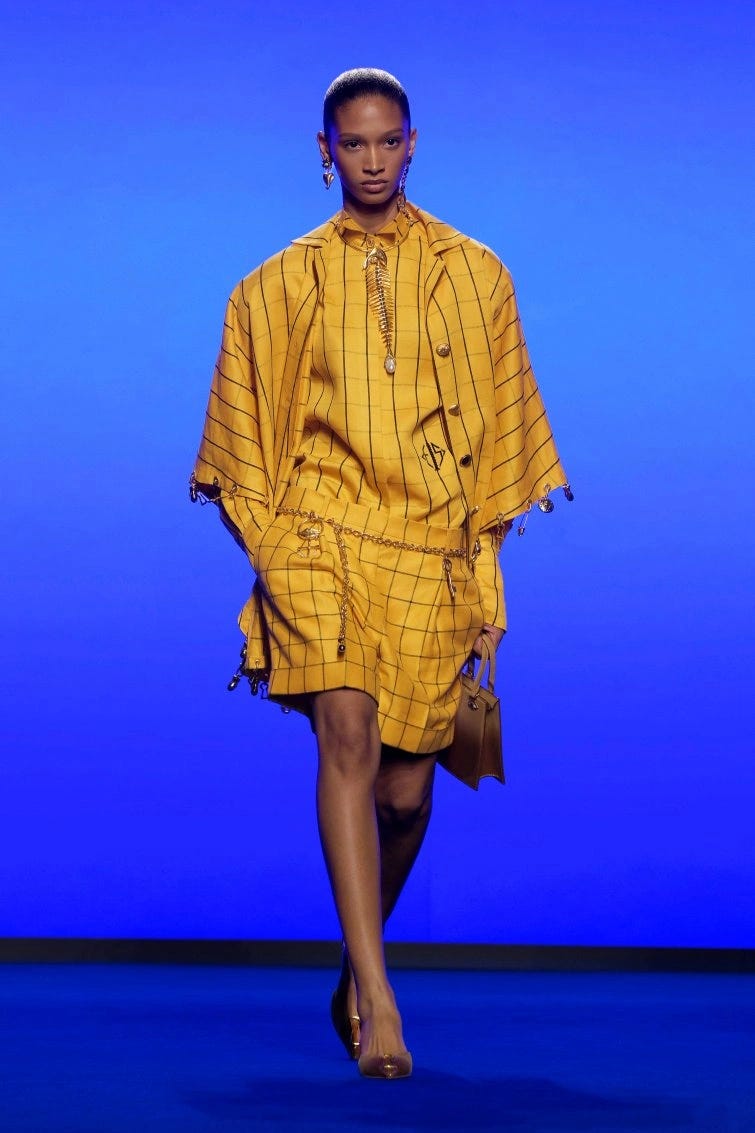
From zebra print to checked looks, Roseberry showcased multiple full looks focused on patterns, in particular their yellow checked look, with a more simplistic check and modern air, it does feel like a nod to Clueless, once again pulling from past fashion trends of the late 20th century. An icon that showcased matching checked looks was Princess Diana, usually being “heritage check on her jacket and matching skirt are classic attire.”
Daniel Roseberry has been Schiaparelli’s creative director since 2019 shortly after being “hailed as Elsa Schiaparelli’s 21st-century heritor” known for “reimagining her [Elsa Schiaparelli] mystical iconography for a time more haunted by the fame and fantasies of American pop” Daniel has encompassed the ideologies and iconography of Maison Schiaparelli. Showcased in the ready-to-wear spring/summer collection Roseberry takes his time to address both the impact of fashion and how fashion can adapt our outlook on the world we live in “The world may feel more chaotic than ever, but here, the mood is celebratory: both of what fashion can be, but of how fashion can make you feel.”
Along with his resurgence of timeless trends in a modernised outlook he celebrates all the women who helped bring his vision to life “every stunning model on this runway, my stylist, my collection director, my studio members. Every woman, from client to seamstress to artisan and technician.”
Schiaparelli showcased its future vintage line with asymmetrical accessories and pushing the norm of fashion, having an 80’s feel through their exaggerated shoulder pads. Through the 46 looks there were strong shape defining pieces both boasting the natural curves of the models and adding onto it manufacturing the silhouette.
While this is on par with their prior fashion shows Roseberry definitely created an experience recognising the resurgence of fashion trends and adapting them to the more modern time period. Along with the resurgence of classic trends, Roseberry makes it possible to both dress-up and dress-down outfits. Showcasing all sides of the spectrum coming together to build a cohesive catalogue, that I feel many will refer back to in the following fashion weeks.
Check out all the looks here!
Activism and Anarchism: How Leigh Bowery wrote the blueprint of being you.
From Sunshine to London. From underground to couture. Now recognised as one of the most influential queer avant-garde creatives.
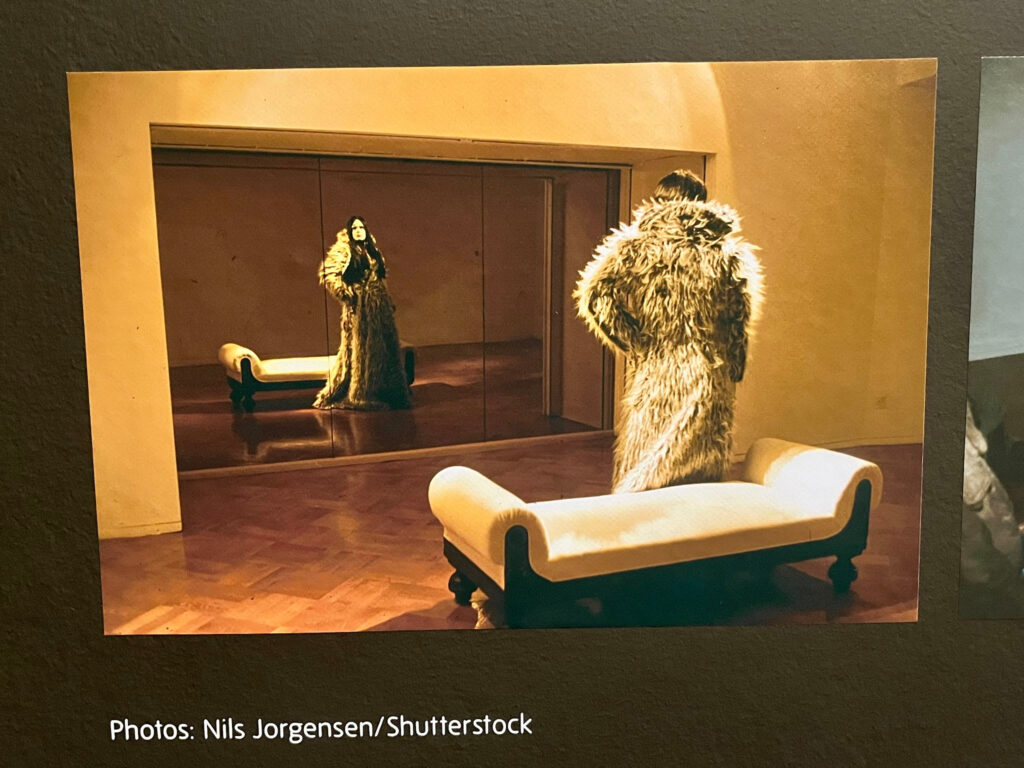
Isabella Knattress/ Tate Museum, Nils Jorgensen/Shutterstock
Isabella Knattress, 02 May 2025
Stage performing live birth to posing and being Lucien Freud’s model, Leigh Bowery has done many outrageous and impressive feats, both in the name of fashion and in the name of performance. We go through his more anarchist ways detailing his fundamental truths of being queer and what he projected into his work.
‘I can’t really tell the difference between a stage and a street’ Leigh Bowery once said – Being a man of many talents and unapologetic disruptions, Leigh Bowery dominated both the club and the street, blurring the lines between performance and everyday life. Whether strutting the runway, throwing down in the club, or simply walking down the pavement, he shattered norms– social, gender, and sexuality– ripping through the status quo, with his signature flair for the extreme.
So why is Bowery still important in 2025? His legacy continues to inspire. From seasoned drag queens to questioning teens, Bowery’s fearless vision has resonated across generational shifts. In a world still obsessed with conformity, he offers the blueprint to fight back– Fiercely, fabulously, and without apology.
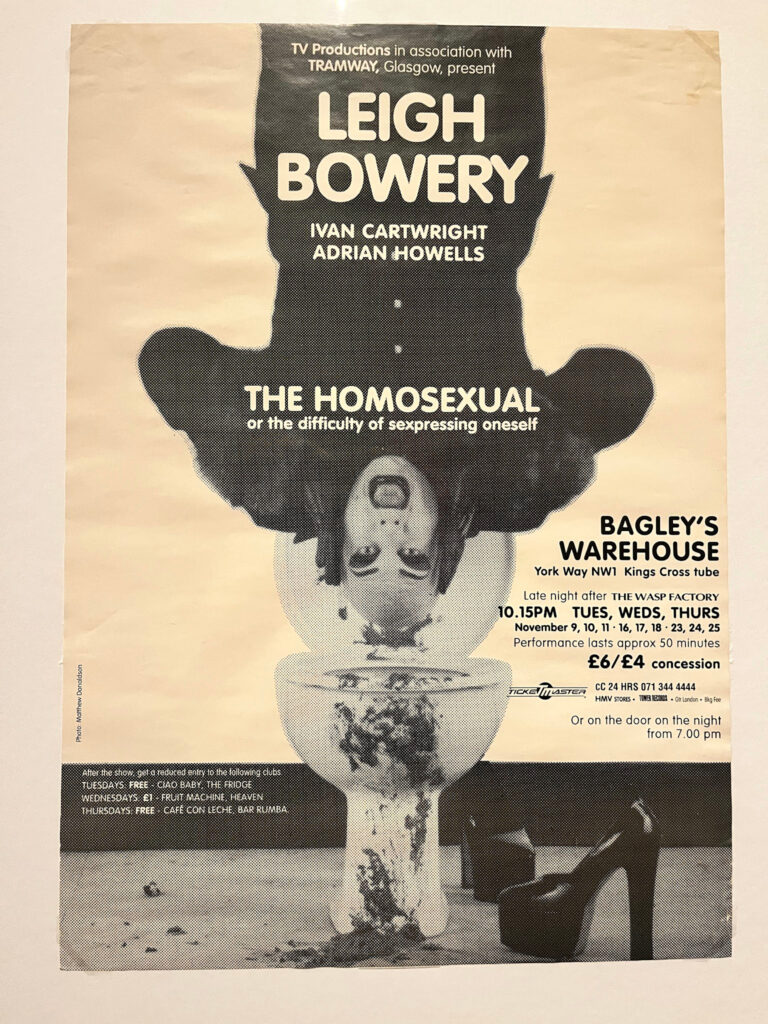
Isabella Knattress (2025), Mathew Donaldson, Poster for ‘The Homosexual’ (1993)
Australia to Anarchy: The roots of Bowerys life
Leigh Bowery was born in 1961 on the outskirts of Melbourne, in the small town of sunshine– far from the avant-garde life he would later dominate. As a teenager he was the ‘chubby and bullied outcast,’ preferring the company of his mother and female relatives, who he learned to knit, crochet, and sew. ‘He was a normal boy growing up,’ his father once said, before adding, ‘probably a bit more complex than we knew.’ While it may have been a quiet life, it never seemed to fit with his desire for creation– or his refusal to conform to traditional masculinity.
He devoured British fashion magazines relying on his dreams and imagination as an escape. But geography wasn’t the only reason he felt like an outsider. Like many questioning teens, Bowery struggled with not only where he was, but who he was. In a country still deeply conservative in its views on sexuality, the tight constraints that held Bowery meant his queer identity couldn’t thrive, being left closeted, constrained and culturally silenced. Homosexuality wasn’t decriminalised in the state of victoria until December of 1980, the same year Bowery left for London.
London was a fresh start. A space of freedom, expression, and new challenges. This became the birthplace of Bowerys experiments, pushing boundaries, and testing his art. His aesthetic choices were a swift departure from the norm. The exaggerated silhouette, and grotesque glamour, wild performances, and self-designed looks that turned his body into a living art piece. In London Bowery was able to transform alienation into his creative force– not only shaping his own identity but also sparking a cultural revolution within the queer community.
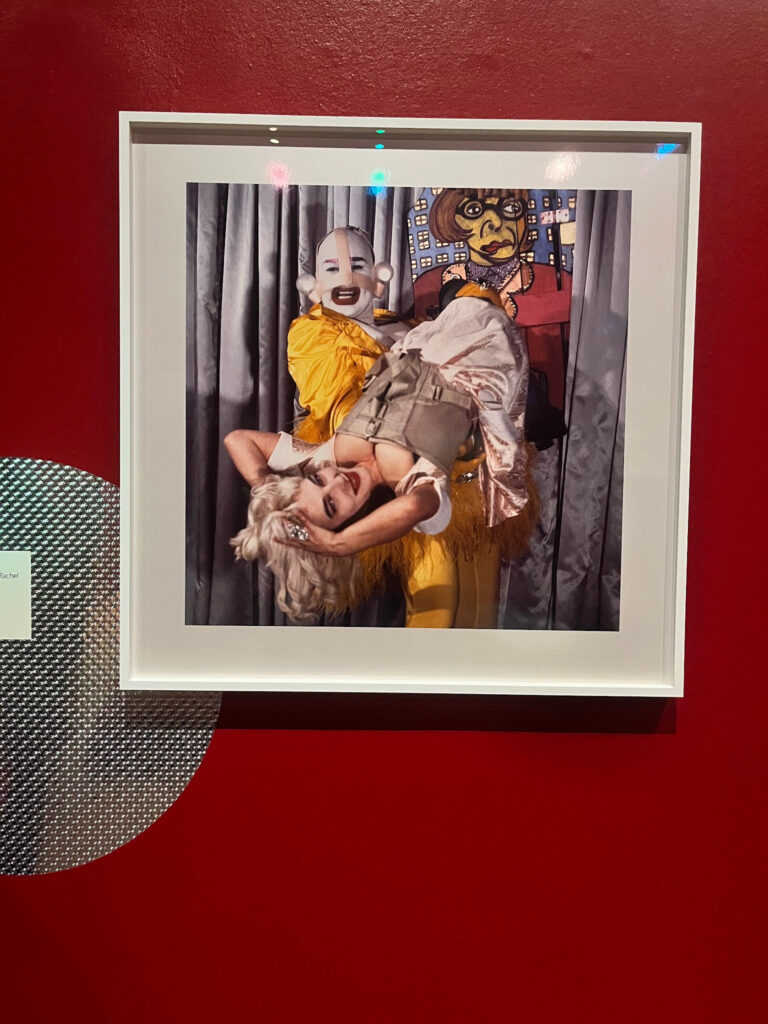
Isabella Knattress (2025) Portrait of Leigh Bowery and Rachel Auburn (1985)
The Politics of Performance: Bowerys Impact on Queer Activism
While Leigh never marched under banners or handed out leaflets– protesting in the traditional sense– his body was a battleground, his art a form of protest. At a time when queer people were being erased, criminalised, and demonised, Bowery turned his visibility into resistance. He didn’t just make statements he made confrontations with his art, confrontations against the societal norm. Against heteronormativity. Against rigid beauty standards. Against the idea that queer bodies should be quiet, palatable, or invisible.
The queer underground pulsed through Bowereys veins, his influence reaching every corner– none more than in, Taboo, the legendary nightclub he co-founded in 1985. More than just a venue, is was a haven for self-expression and fluid sexuality, welcoming everyone from drag queens to fashion icons, well unless Mark Vaultier, Bowery’s good friend, didn’t like the look of you, Sue Tilley, another of Bowerys friends recalled “If he didn’t like the look of someone would hold a mirror up to their face and say, ‘Would you let yourself in?’” Brutal? Maybe. But at its core that was taboo– a place where taste was upended, boundaries were broken, and normalcy wasn’t allowed.
Taboo also became a crucial space throughout the HIV/AIDs crisis, when silence equaled death and art became a life line. Before becoming HIV-positive himself, Bowery did also collaborate with Trojan, an HIV-positive performance artist and Bowery’s unrequited lover. whose work also challenged the status quo through beauty and grotesque parallels. At the time many mainstream artists and institutions were ignoring the crisis, Bowery’s presence on stage and in the club was his protest, his act of defiance. His message was clear: take up space, unapologetically. Be loud. Be different. Be divine.
Protests don’t always wear combat boots or carry a sign. Sometimes it wears a sequin covered masked A-line dress with a cape. Bowery’s legacy shows that resistance can be fashion. That there’s no single way to fight back– only your way. Fierce, fabulous, and unfiltered.
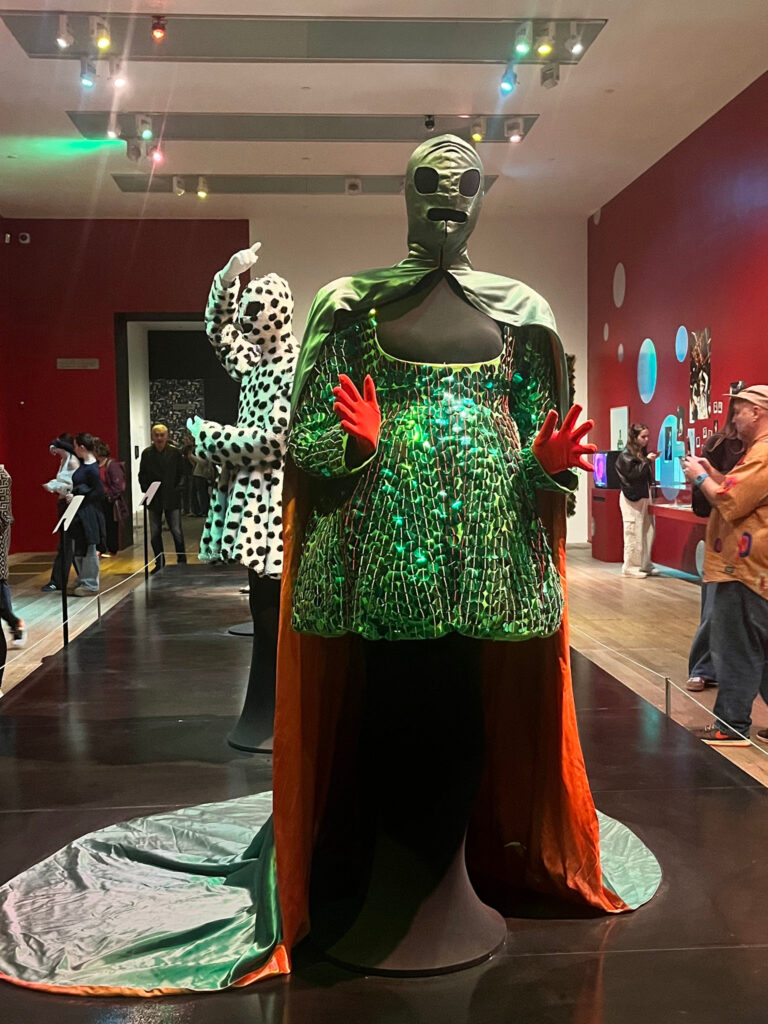
Isabella Knattress (2025) Masked A-Line Dress with Cape (green with salmon-pink lining) (1988)
Club to Couture: Leigh Bowery at the Tate Modern
Not just a cult figure of queer nightlife, but now in 2025 he’s being recognised as a founding figure in contemporary art history. The current exhibition at the Tate Modern is a long-overdue tribute, finally placing Bowery not only in the club but also the couture history books officially.
The show features a mix of photography, costume, video, and performance documentation. Bringing together some of the most iconic looks– his bondage mask creations, his custom brasire wear, and one of my personal favourites his iconic ‘look: ‘A Cunt’’ lycra full bodysuit. Alongside the artists he collaborated with or inspired, including lucian freud, who famously painted Bowery in all his nude power. Walking through the exhibit is like moving through a history of queerness that is loud, messy, sexual, and unashamed.
What is a pleasant and striking realisation about the Tate’s curation is its refusal to sanitise Bowery. They haven’t attempted to flatten or minimise his work, not taking it from art genius to performance clown, appreciating the dedication and creativity of his mind. The exhibit, as Bowery did for his life, confronts the audience with the body as a battleground, full of scars, elegance, bruises, and blood. It frames Bowery not only as an artist but as living, breathing artwork who used his body to challenge every notion of identity, gender, and beauty. Mixing it up and becoming something more than people may have assumed.
For the LGBT+ community, particularly the younger generations, seeing Bowery’s work treated with institutional respect feels fundamental in validating underground as art. Validating the club kid as a creator. The outrageous as legitimate. We unfortunately still live in a time where queer expression is being policed, commodified, or tokenized, the Tate’s celebration of Bowery feels like a quiet rebellion in itself. Taking a page out of Leigh’s book.
While some may consider this to just be an exhibition, not all, many consider this to be recognition. A reclamation. Leigh Bowery did not live to see the mainstream embrace his chaos, just like Van Gogh didn’t live to see his painting be appreciated and valued. Leigh always knew what he was doing mattered, making sure those around him knew that it mattered. Finally, the art world is catching up, with deserved recognition Leigh Bowery is being celebrated.
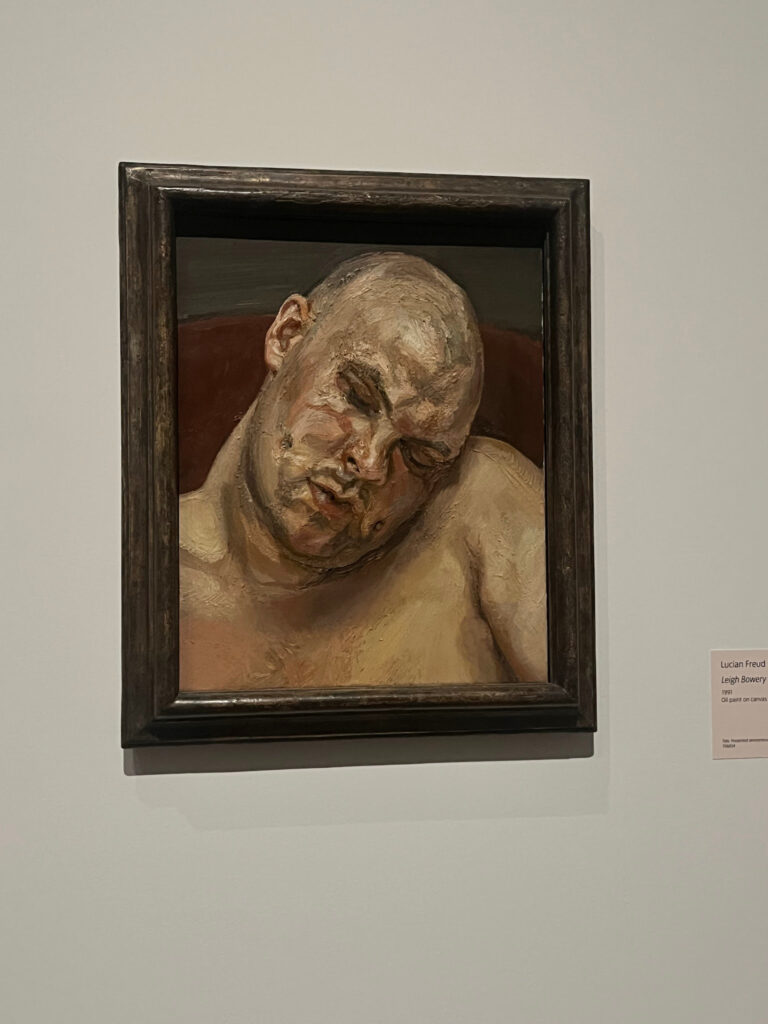
Freud, L.(1991) Leigh Bowery, Oil paint on canvas, Tate Museum (viewed: 01/04/25)
A Legacy now solidified
Today, Bowery has influenced the majority of the queer avant-garde. From the gender bending fashion of Harris Reed to the conceptual drag of many drag artists in particular Sin Wai Kin, and lee McQueen Bowery’s legacy runs through a generation afraid to turn themselves into walking art installations. His influence shows up not only in fashion or performance, but in the very idea that the queer body and mind is a valid medium– one that doesn’t ask permission to exist.
‘Now more than ever are we seeing Leigh bowery’s influence – from major fashion houses like Rick Owens, Charles Jeffery LOVERBOY, to body-distorting alternative drag, to queer nightlife around the globe,’ Jess Baxter comments, while there doesn’t seem to be a master list of all the people influenced by his work and unapologetic nature Leigh Bowery remains to be an icon in the 21st century, in his archives he still provides people with entertainment, intrigue, and blueprints. Forever ensuring the founding blocks for queer youth finding their voice, ensuring that if at least one club kid can make it to couture so can you.
In 2025, protest has changed once again, while parades and picket signs are still used, it’s more common to see people implementing small changes in their wardrobe, silently standing for what they believe in. As attacks on queer and trans bodies rise again, his life urges us not to just be seen, but to be unmissable. In Bowery’s world there’s no such thing as too much. And in ours, perhaps there shouldn’t be either.
The Leigh Bowery! Exhibition is still open in the Tate Modern, London, until 31st August, while many of the pieces have already been shown around the world, if you have seen any of the prior Leigh Bowery exhibitions, it’s definitely worth exploring the memory lane it takes you on, truly a full body experience walking through the spaces.
Protecting Diversity: Gamete and Embryologists at James Cook University develop Sperm Freezing technique alongside Hybrid model Vital in the Conservation of the African Wild Dog
Scientists work to plan ahead for the dropping African wild dog numbers following rapid decline over the past three decades
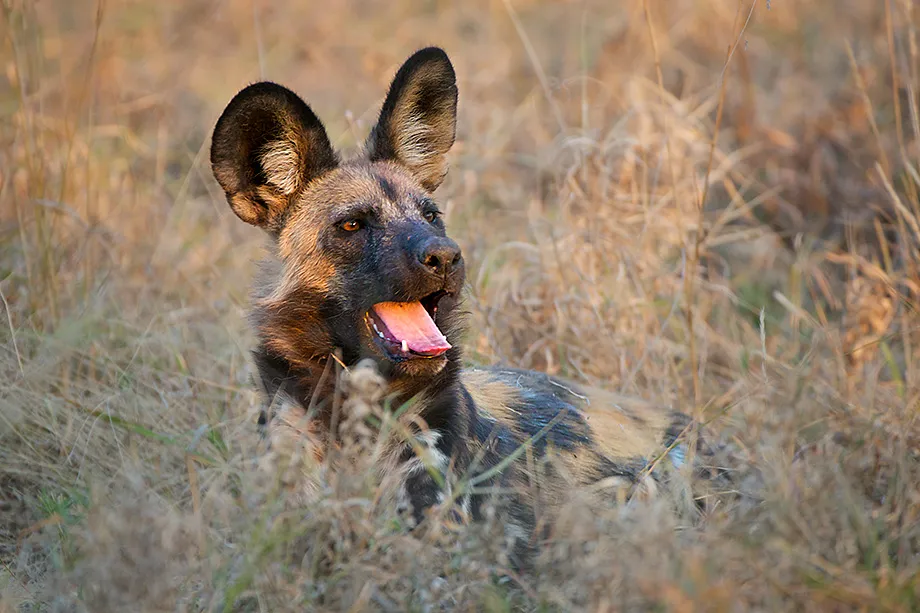
An African wild dog relaxing at dusk. Sean Crane / Sean Crane Photography
By Isabella Knattress
APRIL 30, 2024 AT 10.11 PM
Made up of five subspecies the wild dog population is fewer than 6,600 individuals, 1,400 of them being mature adults. The species has been classified as endangered on the ICUN Red List since 1990 (ICUN Red List).
Scientists at James cook University have developed techniques and technology to assist in sperm freezing, artificial insemination and non-invasive monitoring tools to aid in a Hybrid Conservation management approach for the African wild dog.
Through the research a team of six doctors headed by Doctor Damien Paris, Head of the GAME (Gamete and Embryology) Laboratory at James Cook University, curated an academic journal focusing on the current conservation efforts and how they could be adapted to be more effective, before outlining their own hybrid conservation plan.
‘The African wild dog is a wolf-like canid native to sub-Saharan and the sole species with then Lycaon genus.’ The team introduced the species explaining the significance of the socially complex canid. The mottled coat of yellow, black, brown and white, unique to each individual. Along with their distinctive large rounded ears, long legs.
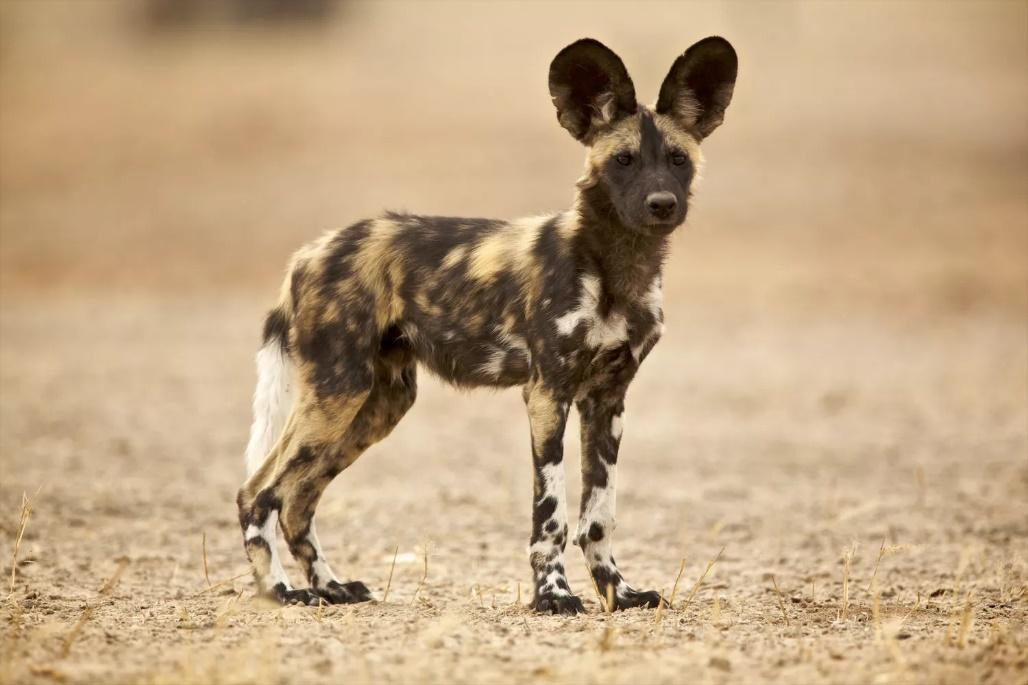
An African wild dog puppy. David Fettes / Getty Images
Up until the 1990, when legislation was implemented over the continent to protect the wild dogs, the biggest cause of population decline was human persecution, yet even with legislation in place the human vs. wildlife conflict still remains a significant threat.
Through the declining numbers there is the concern of a loss of diversity with the wild dogs genes, something that is now affecting the northern white rhinos as scientists utilise the closely related southern white rhino as surrogates, but with a lack of a wide gene pool doubts remain to bring the species back from extinction.
Dr. Paris does hope that collecting and acting sooner rather than later allows the team to keep a wider genetic pool giving the species a better chance of revival.
Current conservation strategies follow similar efforts from other endangered species including captive breeding, but due to the complex nature of the wild dogs social standings causes high levels of stress, having the possibility to cause issues with the animals reproduction and the ability to sustain a social stability.
‘In social carnivores, bonding of animals typically occurs in temporary holding enclosures to […] facilitate the social cohesion of packs and the establishment of hierarchies.’ The team tells us highlighting the issues with current conservation techniques.
‘Unfortunately, the realities of African wild dog conservation mean that on their own, current conservation strategies struggle to overcome the ever-increasing rates of habitat loss, persecution and disease outbreaks that erode natural dispersal and genetic exchange.’
The team suggests that with their African Wild Dog Program is helping to tackle these problems on multiple levels, including maximising genetic diversity and improving social cohesion, pack health and reproduction.
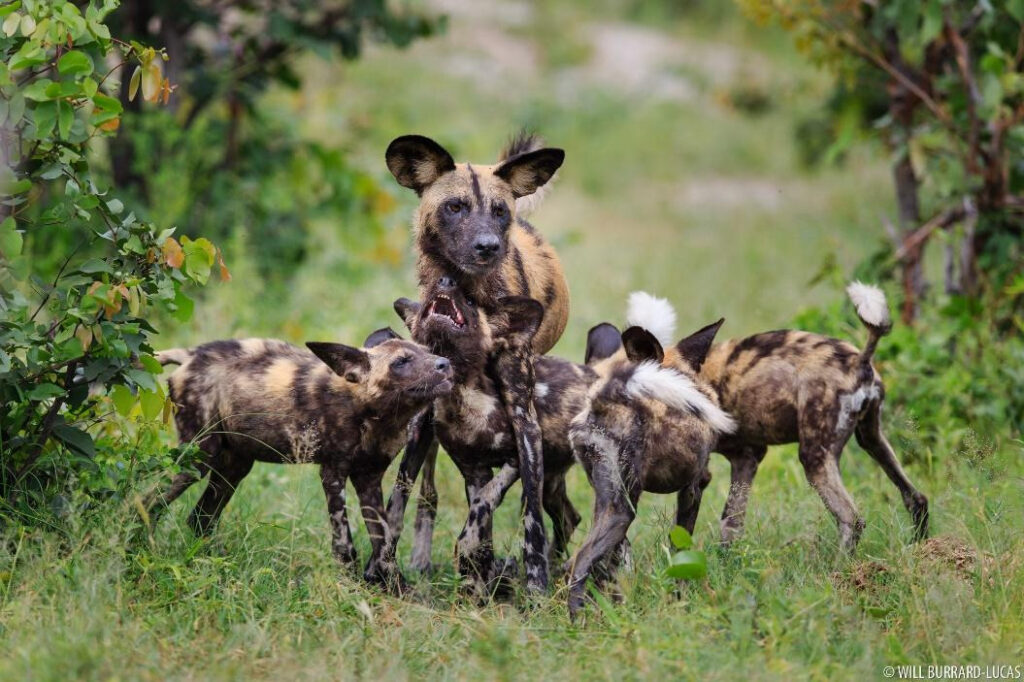
African wild dogs playing in the grass. Will Burrard-Lucas
With the decline of the African wild dog there is more importance now to work on broadening the genetic diversity before the population lowers further, lessening chances of the species being able to sustain a higher population alongside genetic diversity.
The team suggests collecting sperm ‘could be used as a genetic insurance policy against disease outbreaks and local population eradications.’
There is also the possibility for sperm banking allowing gene rescue from deceased animals, injured animals that are unable to breed or assert dominance, or highly rare dogs. In the case of highly rare dog this refers to the West African population, considered a priority due to the sub-species having only 15 mature individuals.
With the newly organised conservation model there comes risks following sperm collection and banking. There is the necessary need to collect from the individuals at the right times and while the testing suggests that males may be fertile throughout the year, prior studies in the African wild dogs have shown seasonal pattern in androgen levels, along with accessory sex glands and certain sperm quality criterion.
Following this concern there is the matter of female cycles, the African wild dog female cycle like most free-roaming canids they cycle once per year, the breeding season being controlled by environmental factors, like day length and the availability of food. Comparing this to captive canids they have been known to cycle more than once a year.
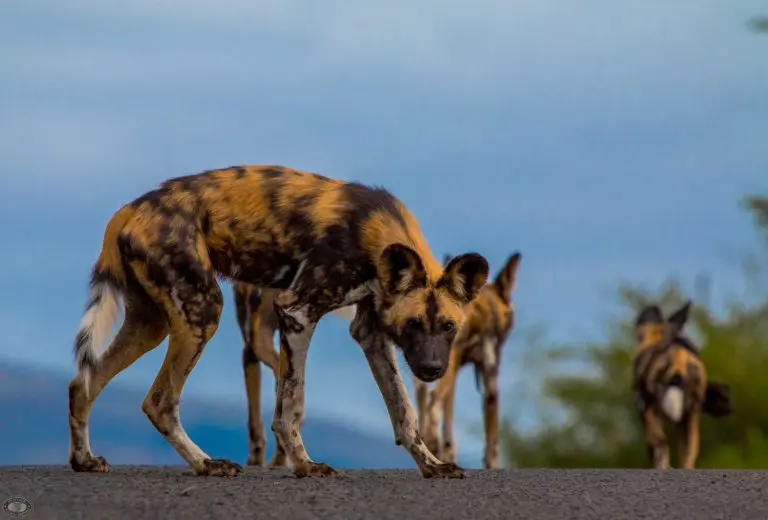
African Wild dogs on hluhluwe game reserve. www.hluhluwegamereserve.com
Through the differences in cycles the team at James Cook University have studied the behavioural differences during an African wild dogs reproductive cycle, using this information they are able to differentiate when the individual is fertile from other phases of the reproductive cycle, with further research necessary they are able to identify when artificial insemination is most probable to work while being non-invasive.
‘Changes in behaviour or vocalisations can be used to monitor reproductive events like oestrus, pregnancy or presence of pups in the den, but also stress, aggression, hierarchy and social cohesion.’
The team did highlight areas of concern when it comes to the animals surrounding the subordinate individuals who help rear the pups. ‘Given that the subordinate African wild dogs usually do not breed but help rear the pups, it is not clear whether they are under some form of physiological reproductive suppression, as seen in other species.’
If the team are able to conclude whether there is a physiological reproductive suppression, whether they are able to reproduce and the pups be brought to term healthily, this allows a larger pool of pups to potentially be born each year, raising the population exponentially.
The hybrid conservation approach is a combination of natural and assisted breeding to manage long-term genetic diversity of a species. Within the case of African wild dogs a hybrid approach would rely on both natural breeding and artificial insemination, using the sperm banks.
Dr. Paris suggests that ‘While the idea of a hybrid conservation management approach for African wild dogs may sound like science fiction’ he then continues ‘[The] practicality reflects current progress in assisted reproductive technology in the species’
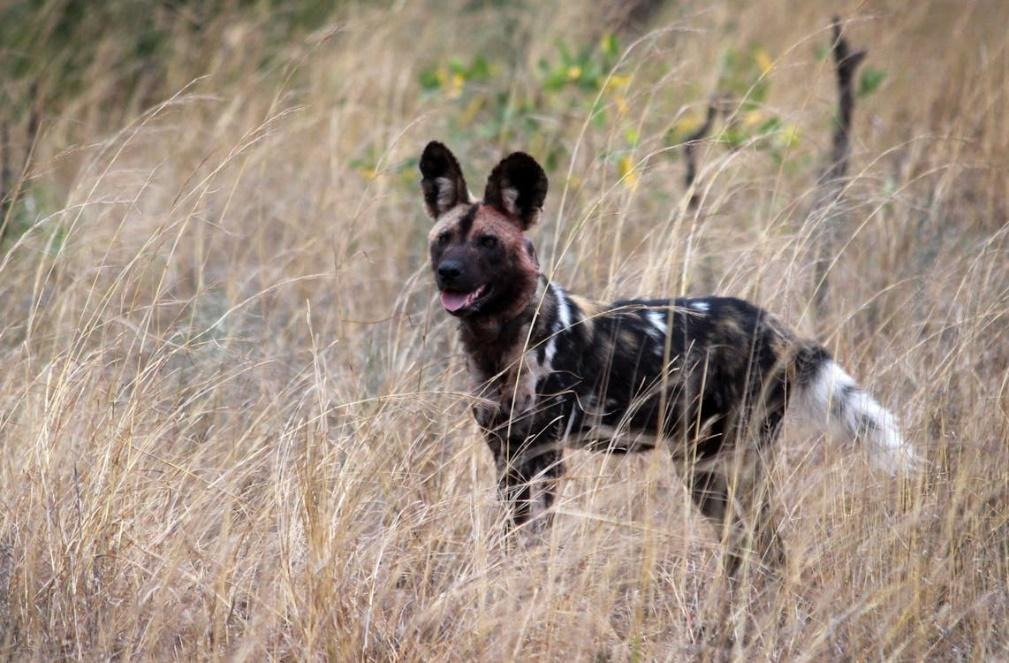
African Wild Dog in Grass Field. Jolene Boshoff/Pexels
With success of other hybrid conservation models such as the black-footed ferret in North America the team at James Cook University believe that with real time adjustments and further research that this model may become a leading example for future hybrid conservation models, allowing scientist worldwide to adapt the model to fit other canids on the brink of extinction.
Following their research and planning of taking the new model out of the lab and into the wild they have addressed a need of full support from multiple funding sources such as, Universities, NGO’s, Government funding, Individual support. Alongside this they will also require cooperation from Zoo’s and state/private reserves, to ensure they have proper access to the animals.
‘there needs to be a rethink about how to most effectively manage the metapopulation.’ They then go on to write. ‘Increasing competition for funding means cost-efficient conservation strategies need to be considered.’
Although with the Artificial Insemination model is still theoretical with how they wish to introduce foreign genes along with the male of the mating pairs genes, not certain if this will be the case they hope that this will be the revolutionising technique to contradict lessening gene pools.
Mixed paternity co-sired by two males, one beta and a low rank male can occur naturally in 10% of African wild dog litters ‘Increasing our confidence that such a hybrid artificial insemination approach will support successful rearing of litters by the whole pack.’
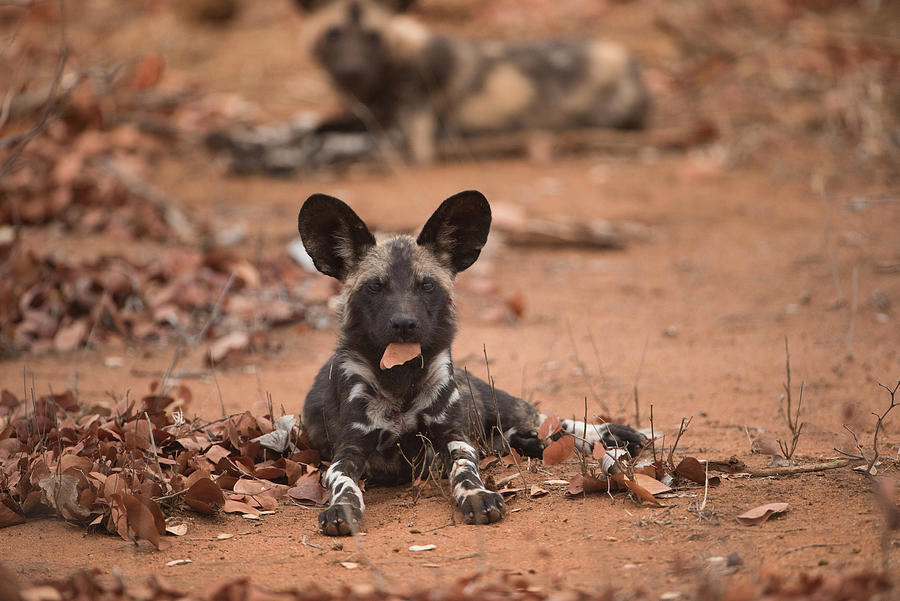
African wild dog puppy. Ozkan Ozmen / fineartamerica
‘This paves the way for the use of AI to manage the valuable genetics of both captive and wild packs of African wild dogs’ the team concludes, ‘This requires the trust, good-will and collaborative effort of captive institutions, reproductive biologists, geneticists, ecologists as well as reserve and metapopulation managers if it is to emulate the success of hybrid programs such as the black-footed ferret. Moreover, such techniques may be directly applicable to other socially complex species, like the Ethiopian wolf – one of the world’s most endangered canids.’
The hope and success of the hybrid conservation lays in trials and adaptation of the strategy. ‘The strengths of any model depends on the quality of the data used to generate it.’ Moving into the future we wonder how this revolutionary canid model will effect the fate of the African wild dog.
Read the full academic journal here
Big Pollinators Tiny Packages
The decline in bees and how we can help them in out day to day life.
Dec 03, 2025
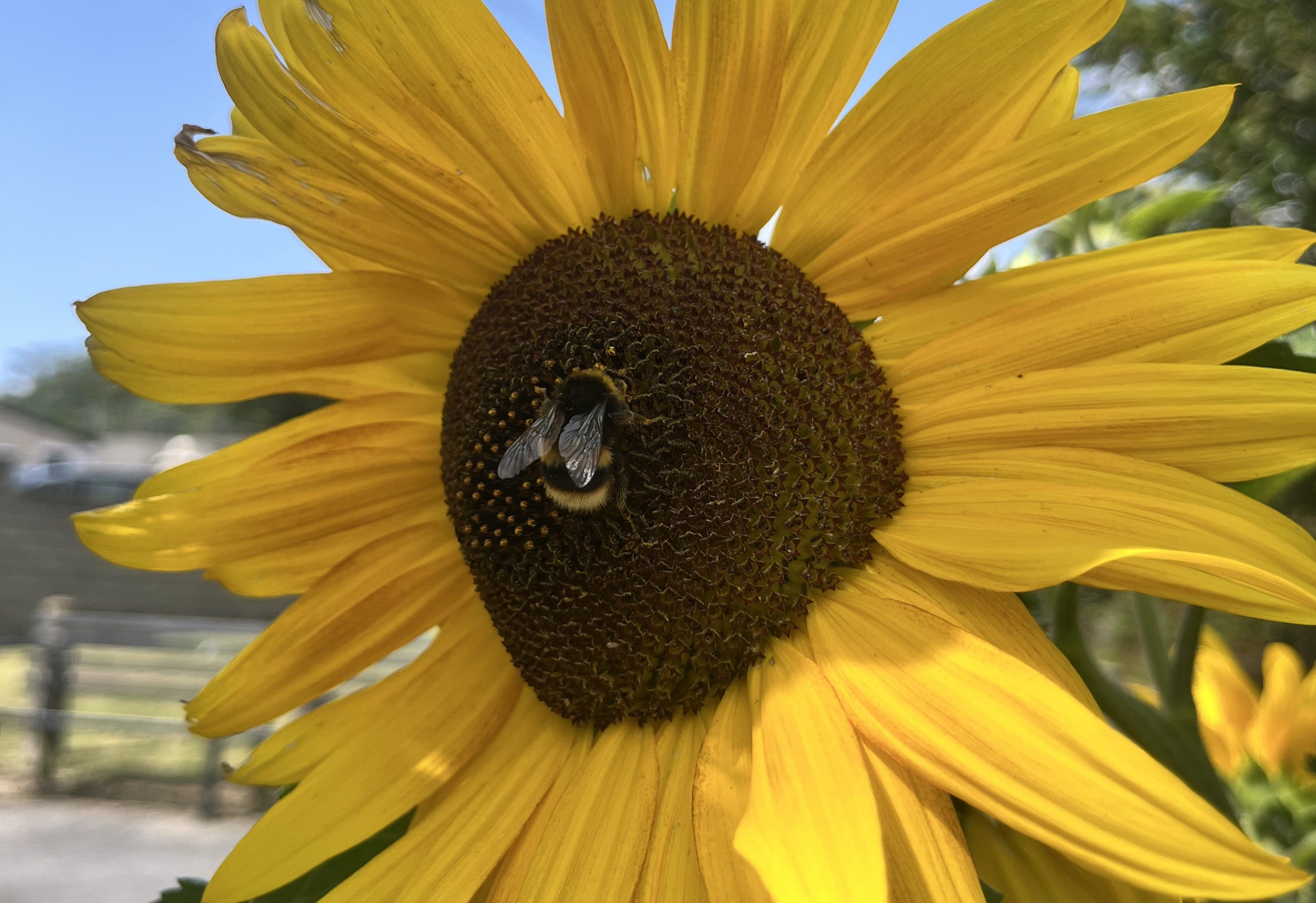
In the UK there are over 270 species of bees and with a decline of 22.5% decline from 2023 – 2024. It wasn’t lost on the general public who started to notice the lack of bees, butterflies, and other wildlife, posting in print and on social media.
In response top UK photographers are coming together creating a photography book based around endangered and disappearing species. The book itself contains dozens of images submitted by more than 60 photographers across the UK.
Heading the Wilder Britain project is Irene Amiet, in an interview with BBC she described the book as a ‘manifesto to what is at stake’ through the interview she commented ‘We can only feel nature’s losses if we know what we stand to lose,’. She explained how ‘[photographers] continuously observe the changes in our local landscapes and how wildlife numbers keep diminishing,’
Through the same article they also interviewed Andrew Mason based in Staffordshire, and found he had noticed a ‘worrying’ decrease in wildlife in his local area, ‘We’re losing our butterflies, we’re losing our bees, our insects,’ he stated.
Following on he added ‘We’ve seen a reduction in the birds because the farmers are cutting the hedgerows, taking away their food source for the winter.’
In the UK according to the Department of Environment Food and Rural Affairs ‘The UK agriculture industry is made up of 209,000 farm holdings, using 17 million hectares of land (69% of the UK land total in 2024).’ 76% of which are crop based and rely on pollination for higher crop yield.
With prices per crop fluctuating and livestock earning more from government price indices, (‘The largest upward contribution was cattle and calves (+4.2 percentage points), followed by milk (+1.3 percentage points) and fresh fruit (+0.6 percentage points)’ Documented in ‘Agricultural price indices – United Kingdom: September 2025’ by Department of Environment Food and Rural Affairs.).
For the crop contribution (minus fresh fruit) ‘The largest downward contribution was wheat (-0.8 percentage points), followed by fresh vegetables (-0.4 percentage points) and barley (-0.3 percentage points).’ again documented in ‘Agricultural price indices – United Kingdom: September 2025’ by Department of Environment Food and Rural Affairs.
Adding onto the positive conservation efforts he said. ‘but we really have to work at this if we stand a chance of saving what we’ve got left.’
So what can we do to protect our local pollinators?
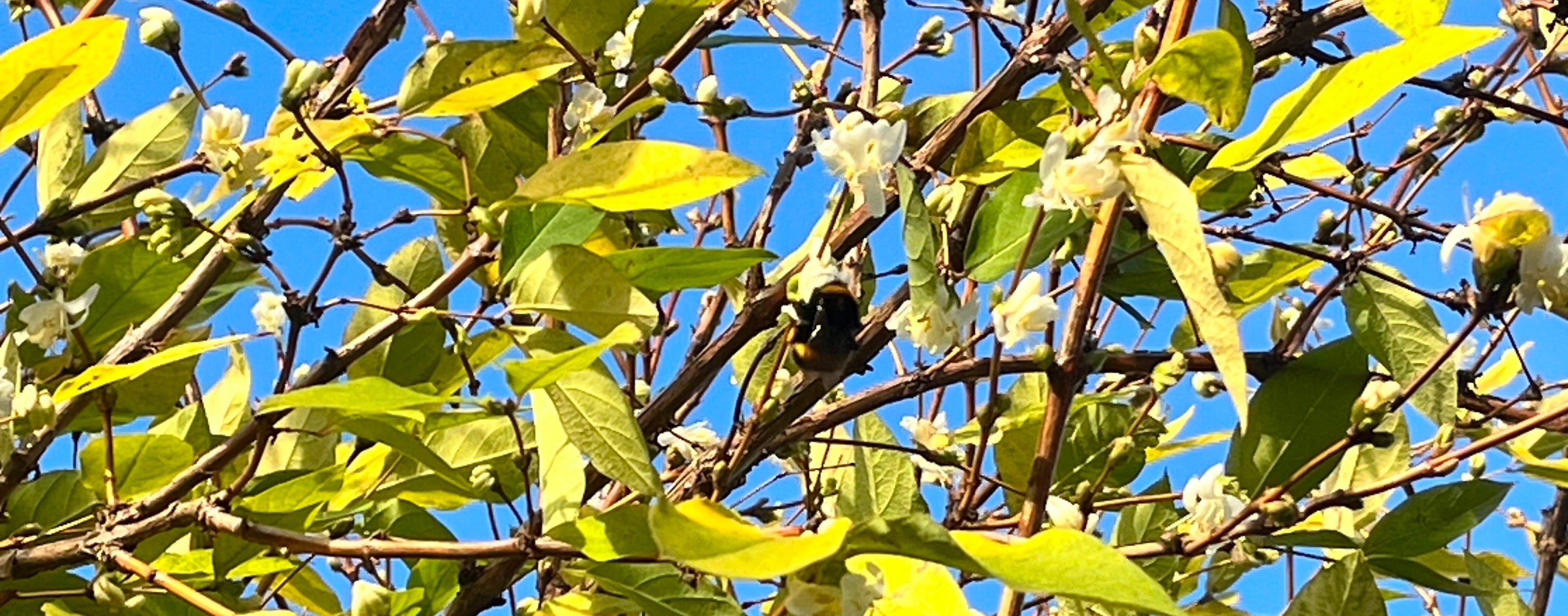
According to GreenPeace.org there are four easy ways to help bees:
- Plant a variety of native and dual pollinating flowers,
- Planting a variety of native flowers ensures that the bees have a correct level of nutrients for a hive to grow and thrive.
- Native flowers will also bloom synchronised with bee lifecycles ensuring they have enough food for when the hive is growing or hungry. (more on this here!)
- Providing a safe drinking spot,
- Now bees aren’t able to drink from large puddles or bird baths but they can drink from shallow pebble pools.
- Finning a lipped plate with smaller pebbles and then adding a shallow amount of water, this allows bees and other insects to safely hydrate.
- As long as you aren’t allergic helping out when finding a bee in need,
- Moving them out of the path of passer-by’s if they seem to be struggling or slowly crawling.
- If available to you, place some sugar water (a 50/50 ratio of sugar and water) on a leaf or rough surface next to the bee but be sure the bee doesn’t fall in.
- Ditch the lawnmower!
- Pausing the amount of mowing you do in a year gives a chance for some native flowers (also known as weeds) to bloom and be perfect pollination real estate for our tiny winged friends.
- The best months to pause your mowing are definitely in spring, specifically May! No Mow May!